Is Radon Gas in Your Home? How to Test, Read Results, and Protect Your Family
This guide was created to help homeowners understand what radon is, why it matters, how to test your home, and what can be done to fix a problem if one is found.
Introductiion
A Safe Home Starts Below the Surface
Radon gas is invisible, odorless, and easy to ignore—until you understand the long-term health risks. This guide is designed to help homeowners make sense of radon: what it is, how it gets into your home, how to test for it, what the numbers actually mean, and what you can do to protect your family, especially if you are planning a basement remodel.
RADON IS A GAS
What is Radon Anyway?
Radon is a naturally occurring radioactive gas that can enter your home from the soil and become trapped inside, especially in lower levels like basements. Long-term exposure increases the risk of lung cancer. The only way to know your home’s radon level is to test for it.

- · Radon is a colorless, odorless radioactive gas that comes from the soil and can accumulate inside homes. You cannot detect it without testing.
- · Long-term exposure to elevated radon levels increases lung cancer risk. It is the second leading cause of lung cancer after smoking, and the leading cause among non-smokers.
- · Every home should be tested for radon, regardless of age or location. Elevated levels have been found in all types of homes in every U.S. state.
- · Radon is measured in picocuries per liter (pCi/L). The EPA recommends fixing homes at or above 4.0 pCi/L and considering action between 2.0 and 4.0 pCi/L.
- · Reliable testing and professional mitigation work. Proven systems can reduce radon levels by up to 99% when properly designed and installed.
- · Basement remodeling is the ideal time to deal with radon. It is easier, cleaner, and often more cost-effective to plan mitigation while the space is open and under construction.
This is informational only and not a substitute for advice from qualified radon and health professionals.
RADON IS A HEALTH HAZARD YOU SHOULD KNOW ABOUT
Why Radon Matters for Your Health
Radon is not just “one more thing to worry about.” It is bigger than that. The health impact is well-documented and taken seriously by major health agencies.
- The U.S. Environmental Protection Agency (EPA) estimates that radon causes about 21,000 lung cancer deaths each year in the United States. EPA+1
- Radon is the second leading cause of lung cancer after smoking, and the leading cause among non-smokers. EPA+1
- People who smoke and are also exposed to high radon levels have a much higher risk of lung cancer than non-smokers exposed to the same radon level. CDC
It is important to understand:
- There are no immediate symptoms from radon exposure—no coughing, no headaches, nothing that tells you “we have a radon problem.” EPA
- Lung cancer from radon exposure typically develops after years of breathing elevated levels, which is why long-term thinking is essential.
Addressing radon is about reducing a long-term, invisible risk to you and your family.

RADON INTRUSION DIAGRAM
How Radon Gets Into Your Home
Radon comes from the ground beneath your home. Because the air pressure inside a house is often lower than the pressure in the soil, your home can act like a vacuum, drawing radon up from the ground.
Radon can enter through:
- Hairline cracks in concrete slabs and foundation walls
- Construction joints and gaps at the footing–wall connection
- Openings around utility penetrations (pipes, wiring, drains)
- Sump pits and floor drains
- Crawl spaces with exposed soil
- In some cases, well water (primarily in homes with private wells, and usually a smaller contribution compared to soil gas)
Once inside, radon can accumulate in the lowest levels—basements, slab-on-grade areas, or rooms above crawl spaces—especially in homes that are tightly sealed for energy efficiency.
Why Remodeling (Especially Basements) Is a Great Time To Check
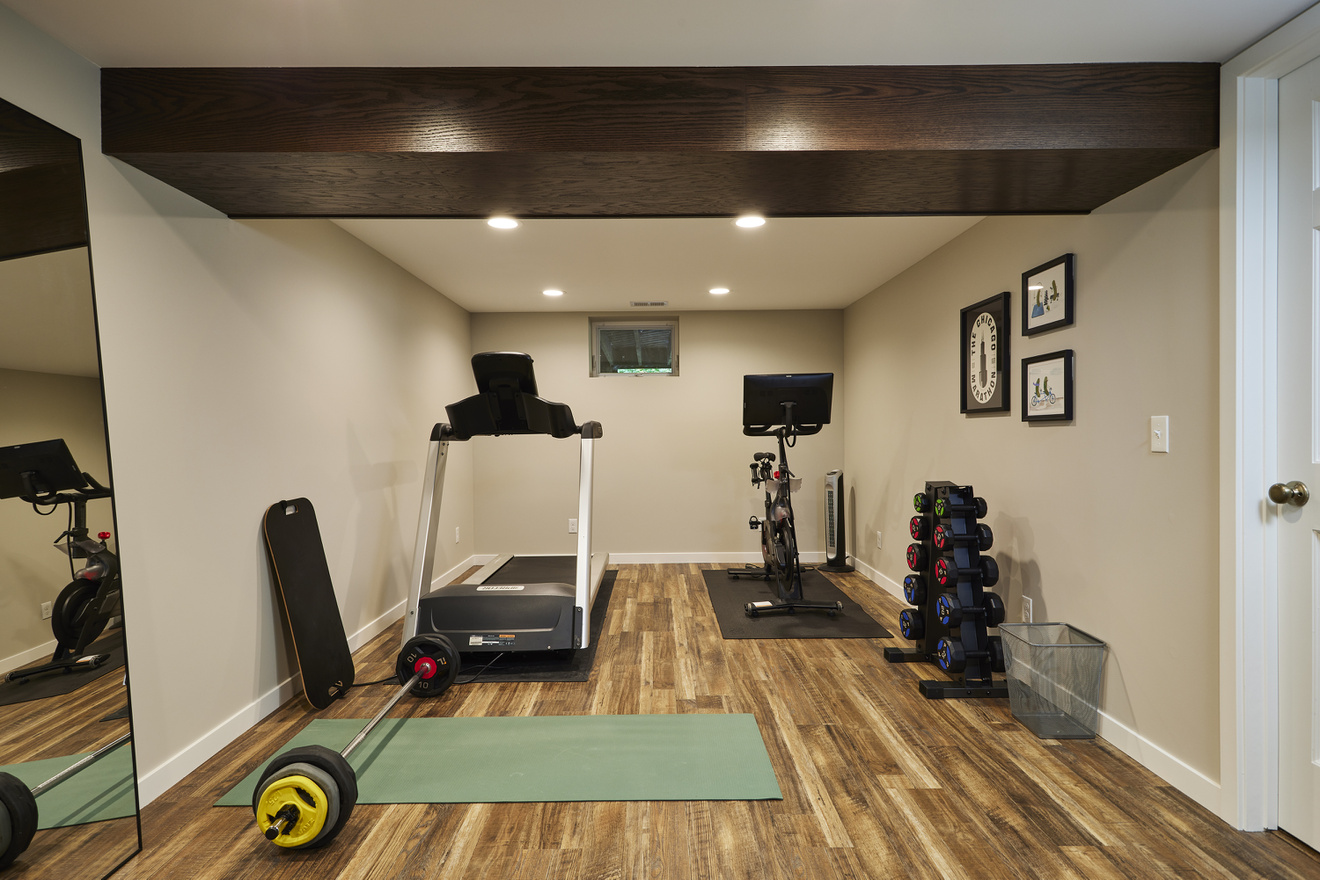
If you are finishing or remodeling a basement, you have a unique window to address radon:
- Easier access. Open walls and floors make it simpler and less invasive to install radon piping and fans.
- Lower cost and disruption. Installing mitigation before drywall, flooring, and trim are complete is usually less expensive and less disruptive than retrofitting a finished space.
- Health and resale value. A radon-mitigated basement can be a selling point and offers peace of mind for both your family and future buyers.
understanding Radon concentration
Understanding Radon Levels
What the numbers mean
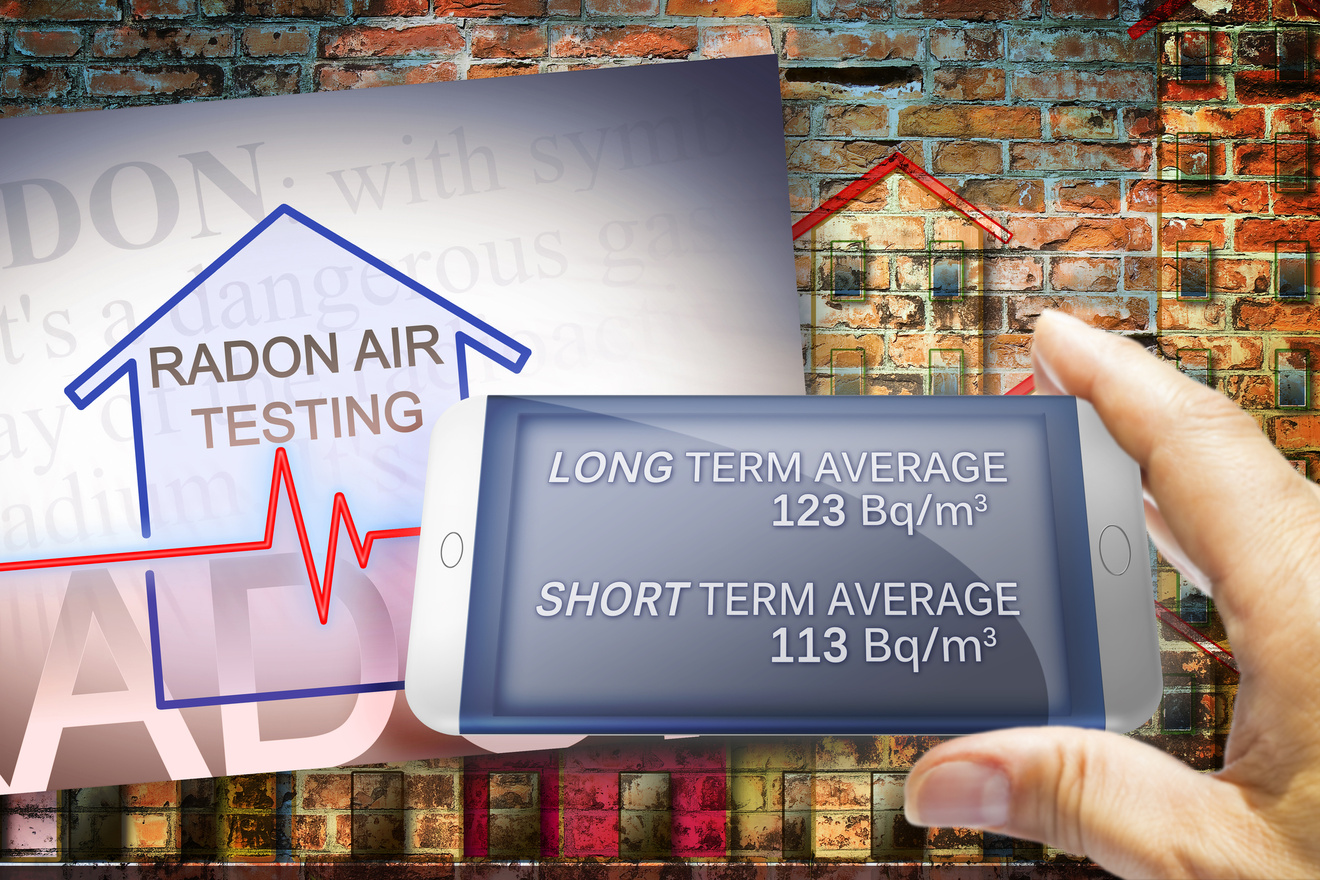
When you test your home, you will receive a radon concentration in pCi/L. Here is how to interpret that number:
- Average outdoor radon level in the U.S.: about 0.4 pCi/L.
- Average indoor radon level in U.S. homes: about 1.3 pCi/L. EPA
- EPA “action level:" 4.0 pCi/L. At or above this level, the EPA strongly recommends taking action to reduce radon. EPA+1
Important points:
- The EPA recommends fixing your home if the radon level is 4.0 pCi/L or higher and considering mitigation if the level is between 2.0 and 4.0 pCi/L. EPA+1
- The World Health Organization (WHO) has recommended a reference level of 2.7 pCi/L (100 Bq/m³) where practical, reflecting the fact that even moderate levels carry some risk. World Health Organization+1
- There is no known completely safe level of radon, but risk decreases as the concentration decreases. American Radon Mitigation
Think of the action level (4.0 pCi/L) not as a “safe vs. unsafe line,” but as a threshold where the risk becomes high enough that mitigation is strongly recommended.

testing for radon
How to Test Your Home for Radon
You should consider testing if...
- You have never tested your home, regardless of its age or type
- You are buying or selling a home
- You are planning a basement finish or major renovation
- It has been more than a few years since your last test, especially if you have made energy-efficiency upgrades, installed new windows, or changed HVAC systems
- You live in an area classified as having moderate or high radon potential (though all homes should be tested) EPA+1
Types of Radon Tests:
Short-Term Tests (2–90 Days)
- Often last 2–7 days for real estate or quick screening, though some devices can run up to 90 days. HUD Exchange+1
- Provide a fast snapshot of radon levels.
- Common for initial testing and during real estate transactions.
- Because radon levels fluctuate with weather, seasons, and how you operate your home, a single short-term test is not always the best reflection of your year-round average.
Long-Term Tests (90+ Days)
- Run for 90 days to one year. EPA Archive+1
- Provide a more accurate picture of your home’s average radon level over time. EPA Archive+1
- Especially useful if a short-term test shows a level near the action threshold, or when you want the most reliable information for long-term decision-making.
Most homeowners start with a short-term test and, if results are elevated or borderline, follow up with a second test or a long-term test before making final decisions—unless time-sensitive decisions (such as a home purchase) make that impractical.

T
Test Kits Vs. Professional Testing Generally there are two options
- Do-It-Yourself Test Kits
- Available through state radon programs, health departments, online vendors, and hardware stores.
- Usually includes a device you place in the lowest lived-in level of your home for a set period, then mail to a lab for analysis.
- Be sure the test kit is approved by your state or follows recognized standards (e.g., ANSI/AARST). AARST Standards
- Licensed or certified radon professionals use calibrated equipment and follow specific protocols. Minnesota Department of Health+1
- Often recommended for real estate transactions, complex homes, or when you want third-party documentation of results. Minnesota Department of Health
“Closed-House” Conditions
For most short-term tests, you will be asked to maintain closed-house conditions, meaning:
- Keep windows and outside doors closed as much as possible (except for normal entry/exit).
- Do not run whole-house fans or systems that bring in a lot of outdoor air.
This helps ensure that the test reflects the radon levels that could occur during typical, closed-up conditions, especially in colder months.
Options if levels are elevated
What to Do if Your Radon Levels Are Elevated
If your test shows 4.0 pCi/L or higher, or if you consistently see levels between 2.0 and 4.0 pCi/L, you should seriously consider mitigation.
Step 1: Confirm the Result (If Time Allows)
If the initial result is:
- At or above 8.0 pCi/L: Many experts recommend moving quickly to mitigation, especially if it is a long-term test result.
- Between 4.0 and 8.0 pCi/L: Consider a follow-up test, ideally a long-term test if you are not under time pressure. EPA Archive+1
- Between 2.0 and 4.0 pCi/L: Consider retesting (possibly with a long-term device) and discuss mitigation options.
Your state radon office, EPA resources, or a qualified radon professional can help you interpret the results and choose next steps. EPA+1
Step 2: Work with a Qualified Radon Professional
While some homeowners install their own mitigation systems, most agencies recommend working with licensed or certified radon contractors who follow recognized standards:
- The National Radon Proficiency Program (NRPP) maintains a searchable list of certified radon professionals. NRPP+1
- The National Radon Safety Board (NRSB) also certifies radon measurement and mitigation professionals and provides a “Find a Professional” tool. nrsb.org+1
- Many state health departments maintain their own lists or license requirements for radon professionals. Minnesota Department of Health+1
Look for professionals who:
- Are licensed or certified where required
- Use approved test devices and follow ANSI/AARST standards AARST Standards+1
- Provide a clear written proposal, expected performance, and a post-mitigation test to verify results
Step 3: How Radon Mitigation Systems Work
The most common and effective method for single-family homes is called sub-slab depressurization (SSD), sometimes referred to as active soil depressurization:
- A pipe is installed through the slab or from beneath a crawl space.
- A continuously running fan draws radon-laden air from under the foundation.
- The pipe carries the gas safely above the roof where it disperses into outdoor air.
When correctly designed and installed, radon mitigation systems can reduce radon levels by up to 99%. Certified Radon Professionals+1
Additional approaches may include:
- Sealing major entry routes (cracks, gaps, sump covers) – helpful, but rarely sufficient on their own.
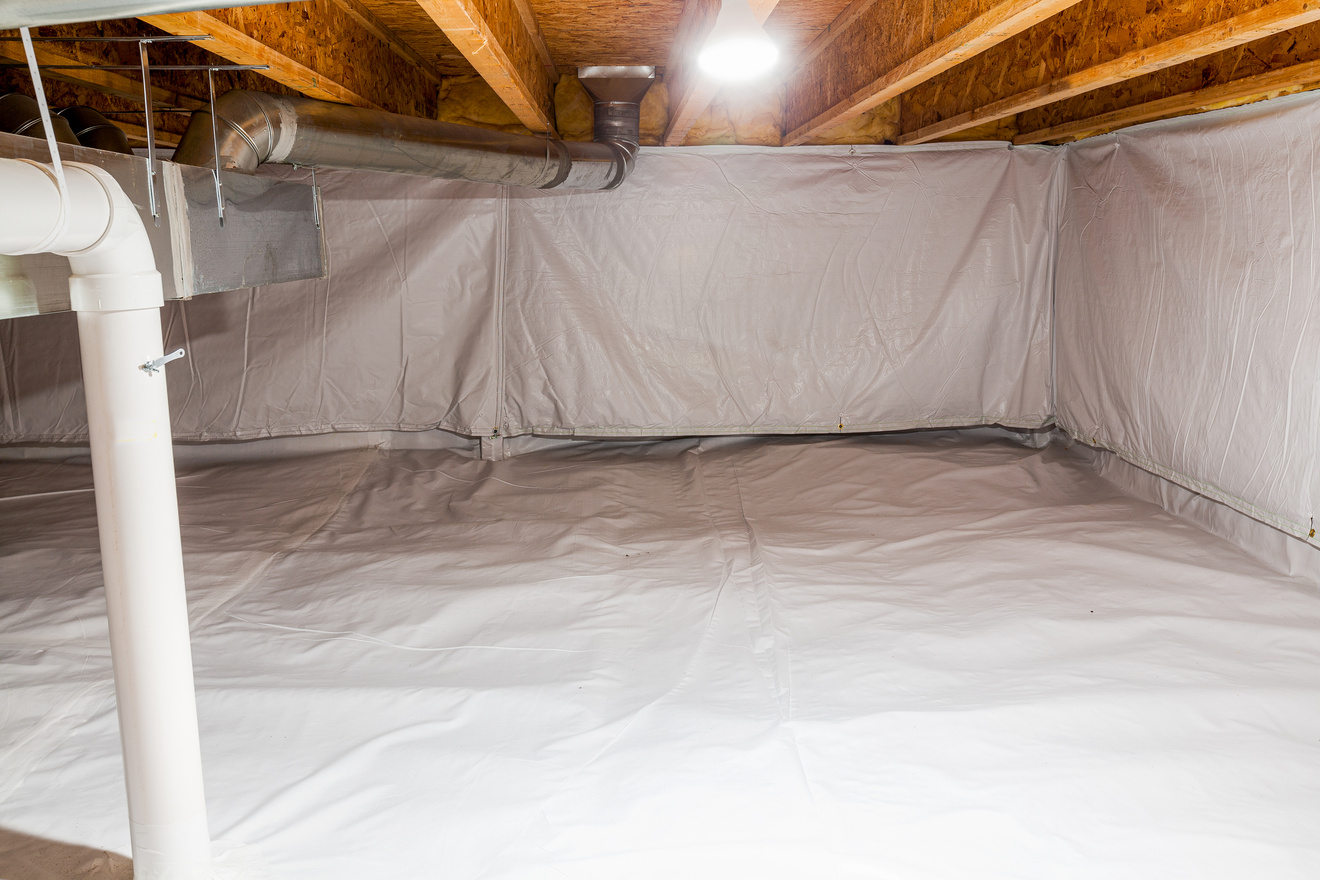
- Crawl-space encapsulation with a sealed membrane and venting.
- Heat recovery or energy recovery ventilators (HRV/ERV) to dilute radon and improve ventilation, sometimes used alongside SSD.
A good mitigation system runs quietly and continuously in the background, with simple indicators (like a manometer) to show that the fan is operating.
basement remodleing is a perfect opportunity to test for radon
Radon and Basement Remodeling
One of the best times to address radon
Why Timing Matters
During a basement remodel:
- Concrete slab penetrations, drains, and sump pits are more accessible.
- It is easier to route vent pipes inside walls and chases, keeping the finished space cleaner aesthetically.
- If needed, you can incorporate radon measures into other moisture or air-quality upgrades (e.g., drainage improvements, insulation, vapor barriers).
Addressing radon during construction or renovation can:
- Reduce labor cost compared to retrofitting a completed basement.
- Avoid tearing out new finishes later if a high radon level is discovered after the project is complete.
- Give you a healthier, more marketable finished space from day one.
If you are meeting with a contractor or designer, make “radon testing and mitigation strategy” part of the early planning conversation.
point of sale considerations
Radon in Real Estate Transactions
Key points to consider
- Many buyers request a radon test as part of their home inspection.
- If the result is above the agreed-upon threshold (often 4.0 pCi/L), the buyer and seller typically negotiate a path forward—such as installing a mitigation system or adjusting the sale terms. EPA+1
- When a mitigation system is installed, documentation of post-mitigation test results, contractor credentials, and any transferable warranties can be valuable.
Because radon is now widely recognized, a well-documented, professionally installed mitigation system is generally viewed as a solution, not a problem.
retesting timing
How Often Should You Retest?
Even after mitigation—or if your current levels are low—it makes sense to:
- Retest at least every few years, because homes settle, HVAC systems change, and lifestyle patterns shift. EPA+1
- Retest after:
- Major renovations or additions
- Changes that significantly tighten or alter ventilation (new windows, air sealing, etc.)
- Installing or replacing a radon fan
If you have a mitigation system, a small, affordable continuous radon monitor can be useful for ongoing spot checks, but it should not replace official testing protocols when documented results are needed.

Monitor types explained
Continuous Radon Monitors
Once you have tested your home and, if needed, installed a mitigation system, a continuous radon monitor can be a helpful way to keep an eye on levels over time.
What continuous monitors actually do:
- Take readings throughout the day instead of only during a short test window
- Show current, short-term, and long-term averages
- Make it easier to see how radon changes with seasons, weather, or changes to your home
- Can confirm that a mitigation system is still working as intended
These devices do not replace official testing when documented results are needed (for example, in a real estate transaction), but they are useful for ongoing awareness.
When choosing a monitor, look for:
- Independent testing or certifications, where available
- Clear display of radon levels in pCi/L
- Short-term and long-term averages
- Easy placement in the lowest lived-in level of your home
Optional features such as app connectivity, alerts, or additional air-quality sensors, if those are important to you
Summary examples of widely used homeowner-grade continuous radon monitors:
- Battery-powered digital monitors such as the Airthings Corentium Home
- App-connected monitors such as Airthings Wave Radon or Wave Plus
- Plug-in units with audible alarms, such as the SafetySiren Pro4 Series
- Compact Wi-Fi monitors with fast reading,s such as the Ecosense EcoQube
- Your choice comes down to how you plan to use it: a simple number on a screen, a unit that triggers an alarm in the basement, or a smart device that graphs trends on your phone.
We are not affiliated with these brands; they are listed as examples only.

Airthings Wave Radon (or Wave Plus)
Type: Smart monitor with app + extra sensors
- Wave Radon: Continuous radon monitor with temperature and humidity, app-connected, and a simple green/yellow/red “wave” status light. https://www.airthings.com/+1
- Wave Plus: Adds CO₂ and VOCs, so it becomes more of a whole-house air quality station plus radon. https://www.airthings.com/+1
- Good for:
- Folks who want phone/app data, graphs, and alerts
- Monitoring radon and basic indoor air quality in frequently used spaces
- Multiple devices around the house tied into one ecosystem
Airthings Corentium Home / Corentium Home 2
Type: Standalone digital monitor (no Wi-Fi required)
- Why it’s popular: Simple, battery-powered unit with a clear screen that shows current, short-term, and long-term radon averages. It is widely used by homeowners and pros for ongoing checks. https://www.airthings.com/+1
- Good for:
- People who want something simple and portable
- Checking mitigation effectiveness over time
- Basements or areas where you don’t care about phone apps
Links:
- Manufacturer page:
- Big-box example:
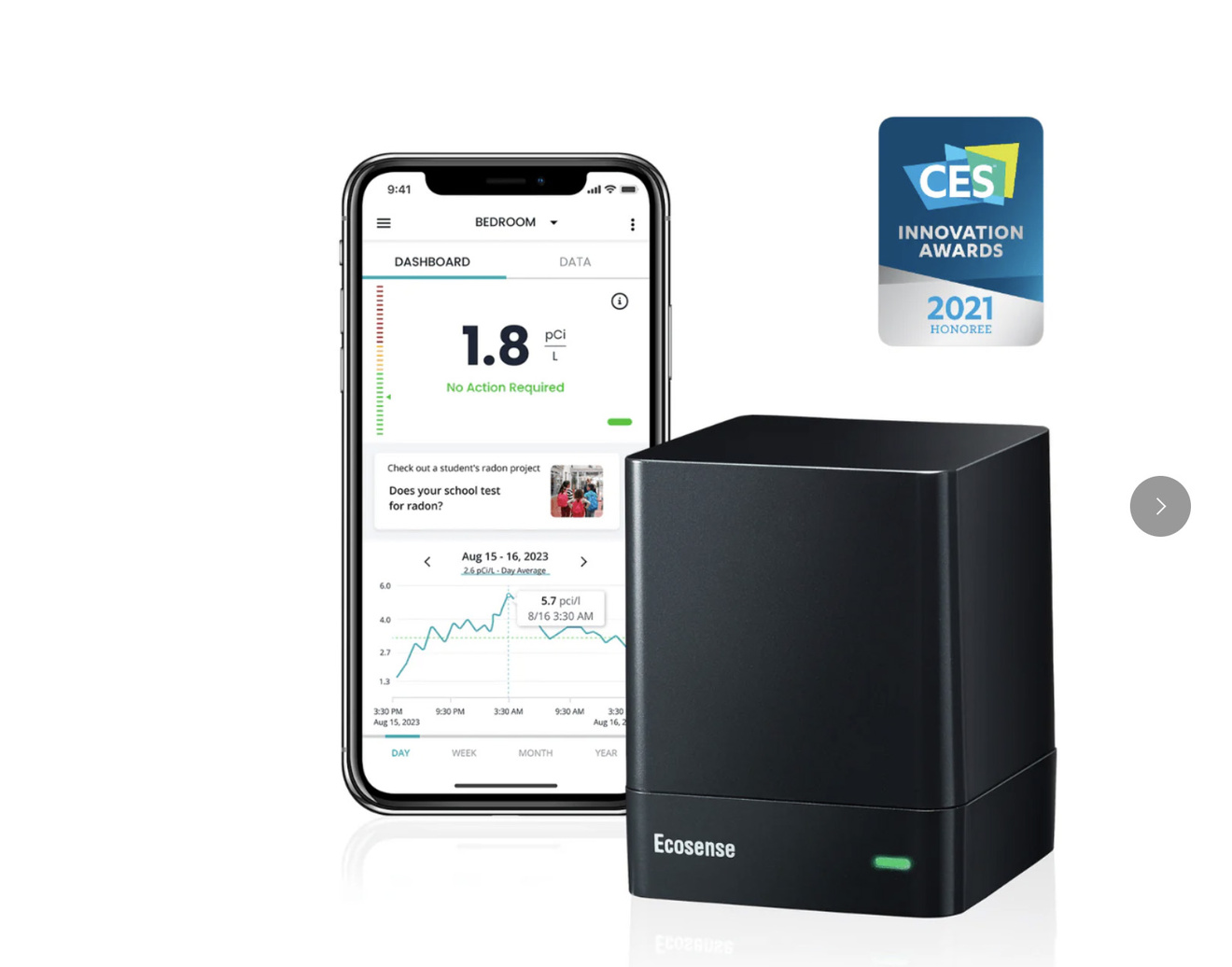
Ecosense EcoQube (EQ100)
Type: Plug-in, Wi-Fi, app-based continuous monitor
- Why it stands out: Very fast initial readings (on the order of minutes), app-based graphing, and professional-grade detection tech aimed at homeowners. Designed specifically for continuous monitoring and trend analysis, with remote access via the app. Ecosense+1
- Good for:
- People who want fast feedback on changes (opening windows, adjusting ventilation, new mitigation system)
- Tech-friendly users who like detailed trend graphs and remote access
Links:
- Manufacturer page:
SafetySiren Pro4 Series Radon Detector
Type: Plug-in wall unit with audible alarm
- Why it’s different: More “alarm style” than app gadget. It plugs into an outlet, has a digital display with short- and long-term averages, and offers audible/visual alarms when levels exceed set thresholds. Marketed as a continuous monitor with an emphasis on real-time warning. Amazon+2Lowe's+2
- Good for:
- Basements or mechanical rooms where a loud local alarm is useful
- People who don’t care about phone apps and just want a number + alarm
Links:
- Retail examples:
Note: Continuous monitors are helpful for awareness and tracking trends, but they do not replace official radon tests when certified measurements are required (such as for a real estate transaction).
Additional resources
Trusted Resources for Homeowners
For deeper dives, current standards and state specific info
- U.S. Environmental Protection Agency – Radon
Overview of radon risks, testing, and mitigation, plus links to state programs. EPA - EPA – A Citizen’s Guide to Radon
A practical handbook for homeowners on testing and fixing radon problems. EPA - EPA – Map of Radon Zones & State Radon Programs
Find your state’s radon office, local contacts, and maps of radon potential. EPA+1 - Centers for Disease Control and Prevention (CDC) – Radon and Your Health
Health-focused information on radon’s impact and how to reduce your risk. CDC - World Health Organization (WHO) – Handbook on Indoor Radon
Global public health perspective and guidance on radon risk and mitigation. World Health Organization - National Radon Proficiency Program (NRPP) – Find a Certified Pro
Tool to locate certified radon measurement and mitigation professionals. NRPP+1 - National Radon Safety Board (NRSB) – For Consumers / Find a Pro
Information for homeowners and directories of certified radon professionals. nrsb.org+1
Your state or local health department website is also a key resource. Many states offer low-cost test kits, lists of licensed radon contractors, and state-specific guidance. US EPA+1
final thoughts
Summary Radon is simple and serious:
- It is simple to test and straightforward to fix with proven methods.
- The risk, if ignored over the years, is real and significant—particularly for smokers or former smokers.
The Short List:
- Every home should be tested for radon.
- Use reliable tests and follow instructions carefully.
- If levels are elevated, mitigation is effective and usually permanent when installed correctly.
- Remodeling, especially basement work, is the perfect opportunity to plan for testing and mitigation.
A healthy home starts below the surface. Paying attention to radon is one of the most practical, evidence-based steps you can take to protect the people who live there. Surprisingly, so many people don’t know about the dangers or understand the solutions to radon.